Recently, the New York Times ran an op-ed by Jennifer Boylan which contended that trans people always come last when it comes to LGBT rights. The article participates in a longer discussion that I can't recapitulate here. Suffice it to say, that conversation is about the use of gender normativity to grease the wheels of gay and lesbian assimilation into middle America -- only faintly tomboyish women marrying each other, while muscled, still-manly men do the same. Since trans people can't be gender normative, their struggles are necessarily marginalized when campaigns for gay equality emphasize gender normativity. Many indignant commenters insist that gays and lesbians cannot be opposed to trans people, that only the straight majority can do that. Unfortunately, that's just not the case, as people opposed on one topic can share ideas on another. I like to think of such partners as strange bedfellows, indeed.
This article and the resulting backlash prompted me to think about my own travels, relocations that often transformed my way of thinking about gender and sexuality. With that, here is "Translocations."
Showing posts with label trans politics. Show all posts
Showing posts with label trans politics. Show all posts
Monday, August 15, 2011


Tuesday, August 9, 2011
Queer Auntie for the Straight Black Family: A quick follow-up on Tyler Perry
For AJC and DLM
It has often been said that Tyler Perry's films are homophobic. But what if that's not the case?

Could it be that Tyler Perry is trying to find the oddly gendered person a stable and necessary place in the "family" that is the black race? We know that some families beat, disown, or try to correct gender-inappropriate family members. Could Perry really be saying that his wild, transvestite character Madea--warts and all--is actually the most important aspect of her extended family, even if she does not have a hetero/nuclear family of her own? Could this actually be a blow in favor of new family formations, instead of the insipid, worn-out, impossible gender oppositions his films claim to sell?
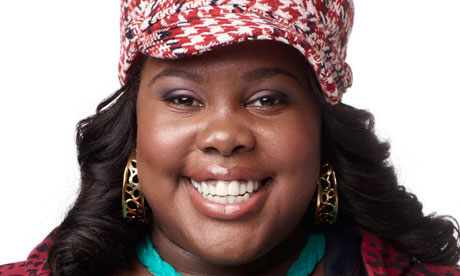
Certainly this is the effect of the films. Whether Perry knows that this is what he has done, I'm not sure. And, even if he does, the cost is high: Madea gets to stay in the family, it seems, because of her perpetual offer of service to help them meet their hetero dreams. It's not clear what she gets out of it... any more than I could ever figure out what the guys on _Queer Eye_ got out of being straight guys' fairy godmothers... or what Lisa Turtle (yes, I went there!) got out of being everyone's matchmaking confidante on _Saved by the Bell_ .(For those of you who are too young to get the reference, take lonely Mercedes from _Glee_, subtract her singing voice and about 80 lbs, and you've got Lisa).
Apparently, it easier to imagine all these black feminine figures as lacking desire -- the more so that they can help you get what you want. Or, put another way, their only desire is that you get what you desire. It's a beautiful fantasy for the one getting. But it seems a bad trade for the person giving: you won't banish or annihilate me as long as I promise to spend all my time helping you get what you want. Umm, ok. I guess that's the assimilation two-step. Glad to know who's leading that dance.


It has often been said that Tyler Perry's films are homophobic. But what if that's not the case?

Could it be that Tyler Perry is trying to find the oddly gendered person a stable and necessary place in the "family" that is the black race? We know that some families beat, disown, or try to correct gender-inappropriate family members. Could Perry really be saying that his wild, transvestite character Madea--warts and all--is actually the most important aspect of her extended family, even if she does not have a hetero/nuclear family of her own? Could this actually be a blow in favor of new family formations, instead of the insipid, worn-out, impossible gender oppositions his films claim to sell?
Certainly this is the effect of the films. Whether Perry knows that this is what he has done, I'm not sure. And, even if he does, the cost is high: Madea gets to stay in the family, it seems, because of her perpetual offer of service to help them meet their hetero dreams. It's not clear what she gets out of it... any more than I could ever figure out what the guys on _Queer Eye_ got out of being straight guys' fairy godmothers... or what Lisa Turtle (yes, I went there!) got out of being everyone's matchmaking confidante on _Saved by the Bell_ .(For those of you who are too young to get the reference, take lonely Mercedes from _Glee_, subtract her singing voice and about 80 lbs, and you've got Lisa).
Apparently, it easier to imagine all these black feminine figures as lacking desire -- the more so that they can help you get what you want. Or, put another way, their only desire is that you get what you desire. It's a beautiful fantasy for the one getting. But it seems a bad trade for the person giving: you won't banish or annihilate me as long as I promise to spend all my time helping you get what you want. Umm, ok. I guess that's the assimilation two-step. Glad to know who's leading that dance.

Saturday, August 6, 2011
Madea Is Her own Baby's Daddy: Thoughts on Tyler Perry's latest
So, here's an unexpected confession: I didn't find Tyler Perry's latest (Madea's Big Happy Family) that bad at all. Up to this point, I had avoided all the Madea movies, thinking that his work with stronger actors would be better. Not so: his misuse of Kathy Bates and Alfre Woodard (in the incoherent Family that Preys) and his utter failure to translate Ntozake Shange's For Colored Girls were tear-out-my-hair infuriating.
The most recent Madea film (my first) was actually pretty pleasant.† I smiled often. I laughed a few times and seldom grimaced. I could see that some aspects of his film-making are improving. He seems to do a better job of mixing the genres that influenced him: the gospel stage-plays were present in his ad-libbing and prominent musical numbers; Eddie Murphy's Klumps clearly inspired Perry to attempt multiple characters, each requiring mounds of makeup and prosthetics; and the talk-show influence actually surfaced in the person of none other than Maury Povich. To top it off, Madea also briefly mentioned that Oprah doesn't want her to text and drive--a brief nod to Perry's real-life friend.
While typing that last sentence, I nearly wrote "him" for Madea. This impulse has nothing to do with wanting to make fun of transvestism by playing with pronouns. I want to account for the array of things that are out-of-place about this character. In a certain sense, Madea is well-acted. Perry is very credible in the role. I never get the sense that he is out of character, losing his accent or posture. Interestingly, he is equally consistent as an elderly male (Uncle Joe, if I recall). His only unconvincing performances are actually when he plays a fairly young, heterosexual male: in films like The Family that Preys... or when speaking as a young heterosexual male (i.e., himself) in interviews.

This film ends ** SPOILER ALERT ** with a trip to Maury Povich. Madea and Mr. Brown are there to find out the paternity of Madea's light-skinned adult child (whose name I forget). From what I could gather, Madea had only recently told her daughter that Brown was the father. But, in this film, a trip to the hospital (first) and a full-on DNA test (on Povich) prove that this is not the case. I am sure the series will resolve it another way, but I would like to contend that Madea is her own baby's daddy.
I'm asking you to think of Madea as the "phallic mother." If I remember my Freud, the father of psychoanalysis said that the infant thinks of the mother as an all-sufficient figure. She provides both the nursing breast and physical protection (because she is so much larger than the baby). In that sense, she fulfills social duties that Freud's Victorian contemporaries divided between men and women. As the story progresses, children age and discover that this phallic mother is umm--missing something. She has been castrated. To explain with a less hyperbolic metaphor, one could say that society typically does not authorize the mother to display aggression and lay down the law in the way that a father figure can. This proper white Victorian woman doesn't have balls. But Tyler Perry's Madea does.
Madea is part of a long line of black female characters who take on both roles. In the infamous Moynihan Report, this strong black matriarch was considered The Problem with black American family structure. But in the Perry films, she seems to be the solution--or, at least, an instrument for rescuing the only version of stable families the films can imagine: two-parent, nuclear families, with a strong man at the helm and a submissive woman under him. But why is the instrument of correction--the one who is supposed to stabilize black families by creating respectful children, responsible fathers, and dutiful wives--why is this figure so gender (and age) inappropriate? And how can such a supposedly mis-gendered person bring about gender normalcy?
The most recent Madea film (my first) was actually pretty pleasant.† I smiled often. I laughed a few times and seldom grimaced. I could see that some aspects of his film-making are improving. He seems to do a better job of mixing the genres that influenced him: the gospel stage-plays were present in his ad-libbing and prominent musical numbers; Eddie Murphy's Klumps clearly inspired Perry to attempt multiple characters, each requiring mounds of makeup and prosthetics; and the talk-show influence actually surfaced in the person of none other than Maury Povich. To top it off, Madea also briefly mentioned that Oprah doesn't want her to text and drive--a brief nod to Perry's real-life friend.
While typing that last sentence, I nearly wrote "him" for Madea. This impulse has nothing to do with wanting to make fun of transvestism by playing with pronouns. I want to account for the array of things that are out-of-place about this character. In a certain sense, Madea is well-acted. Perry is very credible in the role. I never get the sense that he is out of character, losing his accent or posture. Interestingly, he is equally consistent as an elderly male (Uncle Joe, if I recall). His only unconvincing performances are actually when he plays a fairly young, heterosexual male: in films like The Family that Preys... or when speaking as a young heterosexual male (i.e., himself) in interviews.

This film ends ** SPOILER ALERT ** with a trip to Maury Povich. Madea and Mr. Brown are there to find out the paternity of Madea's light-skinned adult child (whose name I forget). From what I could gather, Madea had only recently told her daughter that Brown was the father. But, in this film, a trip to the hospital (first) and a full-on DNA test (on Povich) prove that this is not the case. I am sure the series will resolve it another way, but I would like to contend that Madea is her own baby's daddy.
I'm asking you to think of Madea as the "phallic mother." If I remember my Freud, the father of psychoanalysis said that the infant thinks of the mother as an all-sufficient figure. She provides both the nursing breast and physical protection (because she is so much larger than the baby). In that sense, she fulfills social duties that Freud's Victorian contemporaries divided between men and women. As the story progresses, children age and discover that this phallic mother is umm--missing something. She has been castrated. To explain with a less hyperbolic metaphor, one could say that society typically does not authorize the mother to display aggression and lay down the law in the way that a father figure can. This proper white Victorian woman doesn't have balls. But Tyler Perry's Madea does.
Madea is part of a long line of black female characters who take on both roles. In the infamous Moynihan Report, this strong black matriarch was considered The Problem with black American family structure. But in the Perry films, she seems to be the solution--or, at least, an instrument for rescuing the only version of stable families the films can imagine: two-parent, nuclear families, with a strong man at the helm and a submissive woman under him. But why is the instrument of correction--the one who is supposed to stabilize black families by creating respectful children, responsible fathers, and dutiful wives--why is this figure so gender (and age) inappropriate? And how can such a supposedly mis-gendered person bring about gender normalcy?
Subscribe to:
Posts (Atom)